Symptoms of Heart Disease: Early Warning Signs You Should Never Ignore
Symptoms Heart disease remains among the top causes of death in the world, and yet most people hardly recognize the early warnings. Your body usually gives subtle hints before any big heart problem. Symptoms of heart disease can be recognized for timely medical intervention and prevention of serious complications. sign of heart disease Be it chest pain, shortness of breath, or unexplained fatigue, no such symptoms should ever be taken lightly. This article will help you understand the most common, silent, and gender-specific symptoms of heart disease so you can keep your heart safe and healthy.
What Are the Symptoms of Heart Disease?
Symptoms of heart disease are physical changes that result from faulty functioning of the heart. Symptoms can be related to specific types of conditions, like blockage of the arteries, a weak heart muscle, abnormal heart rhythms, or heart failure. Some symptoms come on abruptly, while others may take several months or even years to appear. Recognizing early signs most definitely increases the likelihood of receiving appropriate treatment in good time.
Common Types of Heart Disease
Coronary Artery Disease (CAD) – Occurs when the arteries supplying blood to the heart become blocked or narrowed.
Heart Attack (Myocardial Infarction) – When blood flow to the heart stops suddenly.
Heart Failure – When the heart cannot pump blood effectively.
Arrhythmia – Irregular or abnormal heartbeat.
Congenital Heart Disease – Structural defects in the heart that are present from birth.
Common Symptoms of Heart Disease
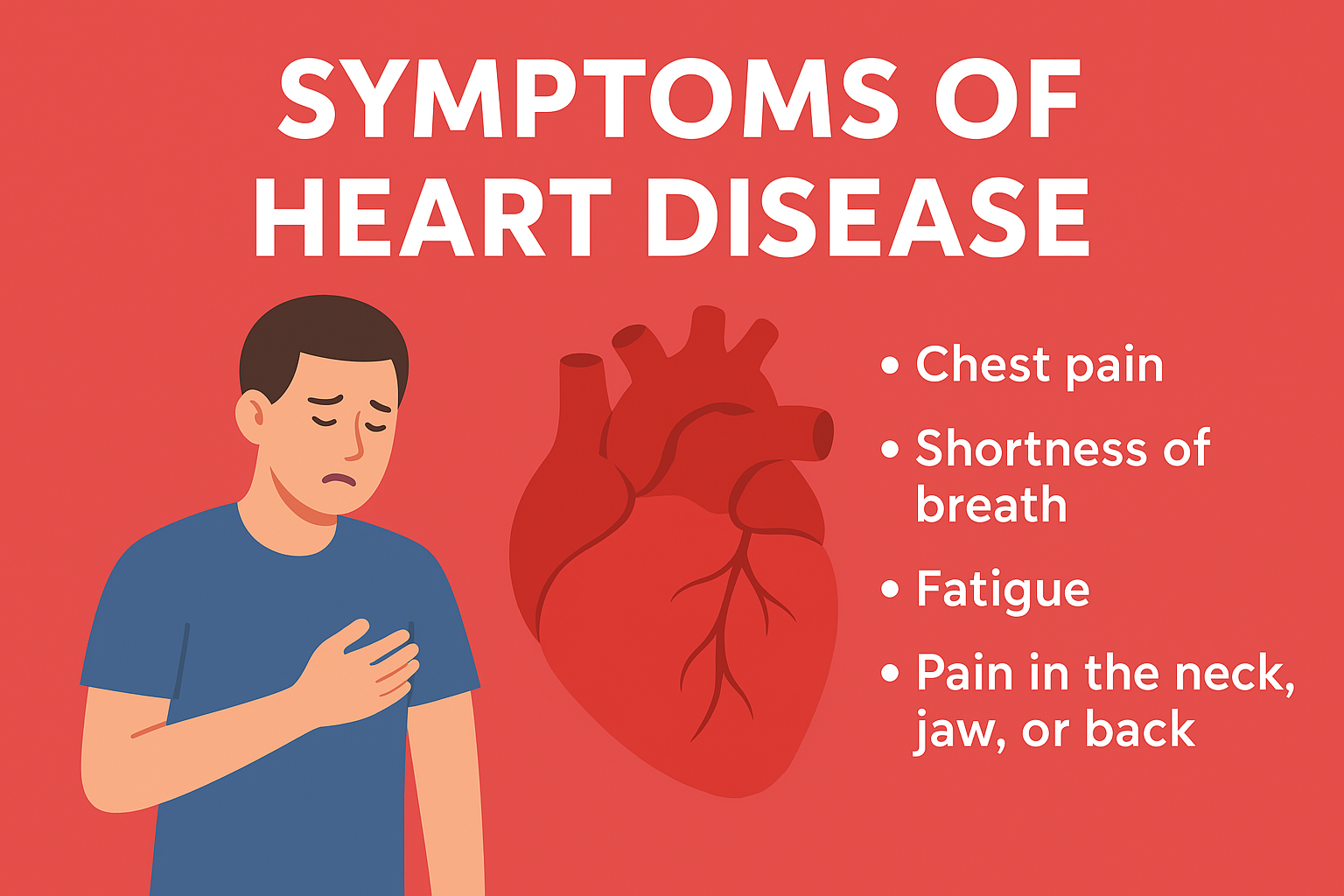
Heart problems can show up differently in each person, but some warning signs are common and should never be ignored:
Chest pain or tightness (angina)
Shortness of breath
Fatigue or weakness
Dizziness or fainting
Irregular or rapid heartbeat
Pain in the arm, neck, jaw, or back
If you experience these symptoms frequently, it’s important to consult a doctor immediately.
Silent Symptoms of Heart Disease
1. Nausea and Indigestion
Heart ailments can present themselves as stomach troubles. Many persons have the tendency to mistake the pain of a heart attack for acidity or gas pain.
2. Morning Fatigue
Fatigue upon rising even after a good night’s sleep could be a sign of a weak heart.
3. Sleep Problems
Sleep apnoea, snoring, and disturbed sleep are closely linked with heart disease. Poor oxygen levels during sleep put extra strain on the heart.
Symptoms of Heart Disease in Men
Men usually undergo:
Sharp chest pain
Left arm or shoulder pain
Sweating
Low energy
Breathlessness
Symptoms of Heart Disease in women
Symptoms are often different from those experienced by men. While chest pain may still occur, women may notice
Unusual tiredness
Back or neck pain
Nausea and vomiting
Shortness of breath
Anxiety-like symptoms
Symptoms in women are often milder and thus difficult to diagnose, but they should be taken just as seriously.
Major Causes of Heart Disease
Our daily lifestyle and eating habits play a major role in maintaining heart health.
1. Unhealthy Diet
Eating foods high in cholesterol, trans fats, and sugar can lead to fat buildup in the arteries, causing blockages.
2. Smoking
Nicotine and carbon monoxide in cigarettes damage blood vessels and reduce oxygen supply to the heart.
3. Stress
Chronic stress increases blood pressure and puts strain on the heart.
4. Lack of Exercise
A sedentary lifestyle weakens heart muscles and slows down blood circulation.
5. Family History
If someone in your family has heart disease, your risk may be higher due to genetic factors.
Why Heart Check-Up Tests Are Important
Early detection can save lives. Regular diagnostic tests help doctors understand the current condition of your heart and prevent major complications.
Diagnosing Heart Disease
1. Lipid Profile Test
This test checks cholesterol and triglyceride levels. High cholesterol increases the risk of artery blockage.
2. ECG (Electrocardiogram)
An ECG records the electrical activity of the heart and helps detect irregular heartbeat or early signs of a heart attack.
3. TMT (Treadmill Test)
In this test, you walk on a treadmill to check how your heart performs under stress.
4. 2D Echo
This ultrasound-based test shows the structure and pumping efficiency of your heart.
5. Cardiac Enzyme Test
If a heart attack is suspected, blood is tested for specific enzymes that indicate heart muscle damage.
How to Protect Your Heart
Taking care of your heart starts with small daily habits. Here are some simple lifestyle tips to protect your heart for the long term:
1. Eat Healthy
Include fresh fruits, vegetables, and whole grains in every meal.
Avoid fried and processed food.
Limit salt and sugar intake.
2. Exercise Regularly
At least 30 minutes of brisk walking, yoga, or cycling every day can strengthen your heart and improve blood flow.
3. Avoid Smoking and Alcohol
Both smoking and excessive alcohol weaken your heart and damage blood vessels.
4. Manage Stress
Meditation, deep breathing, and spending time on hobbies help control stress levels.
5. Get Regular Check-Up
A yearly heart health screening helps detect any issue early and keeps your heart in check.
Special Heart Care Tips for Women
Women often ignore early symptoms of heart problems, assuming they’re just tired or stressed. But heart disease risk among women is also increasing rapidly.
After menopause, lower estrogen levels increase heart disease risk.
Symptoms in women may include mild chest discomfort, nausea, or fatigue.
Regular blood pressure and lipid profile tests are essential.
Conclusion: A Healthy Heart Means a Happy Life
Symptoms of heart disease may manifest from chest pains and difficulty breathing to fatigue and dizziness. Recognizing these signs and taking immediate actions can avoid serious complications. A healthy lifestyle, regular check-ups, and early detection are considered the best shields for the heart, enabling one to lead a long, healthy life.
Heart disease may be a silent killer, but the good news is — it’s largely preventable.
With early diagnosis, regular exercise, and healthy eating, you can keep your heart strong for years to come.
Just remember these three golden rules:
Eat right, stay active, and get tested regularly.
Your heart takes care of you every second — it’s time you take care of it too.
Frequently Asked Questions

1. What are the first symptoms of heart disease?
Early symptoms include chest pain, shortness of breath, fatigue, dizziness, and irregular heartbeat.
2. Is heart disease possible without chest pain?
Many people, especially women, have silent symptoms such as nausea, back pain, or unusual tiredness without chest pain.
3. What are silent symptoms of heart disease?
Possible silent signs include indigestion-like discomfort, jaw pain, mild breathlessness, sleep problems, and unexplained fatigue.
4.what tests detect symptoms of heart disease?
ECG, 2D Echo, TMT (stress test), lipid profile, and blood pressure tests are useful to diagnose various heart conditions.
5. Do the symptoms of heart disease differ between men and women?ween men and women?
Men often experience pressure in the chest and pain in the left arm, while women may experience fatigue, back pain, nausea, or jaw discomfort.